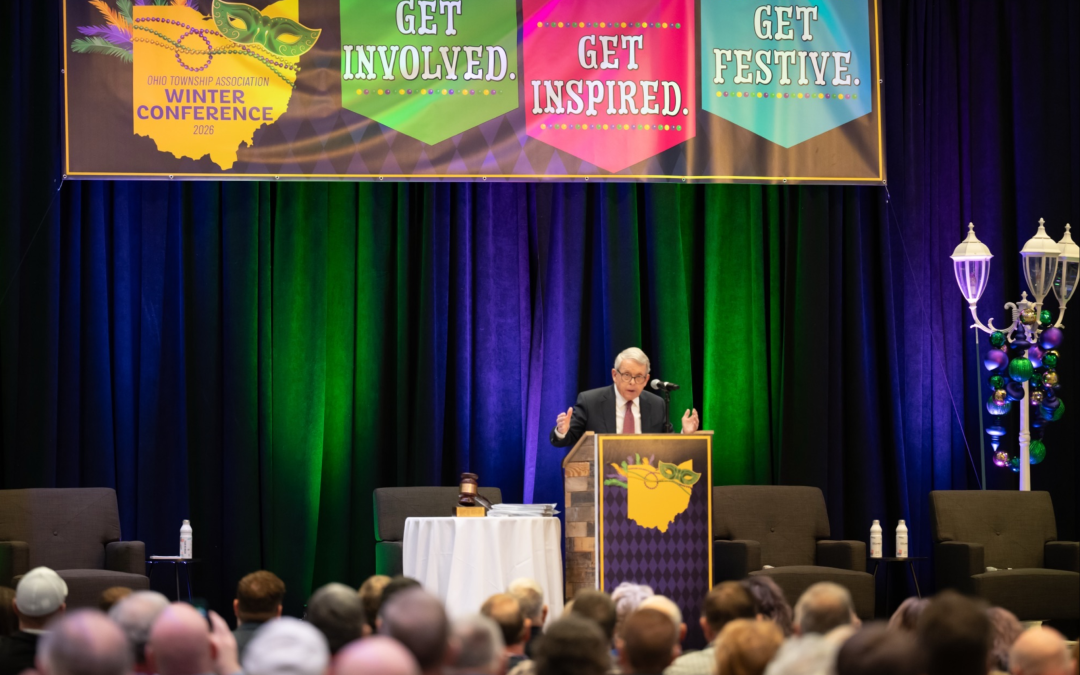
Last Thursday, February 5, Governor DeWine spoke to township officials from across the state at the OTA’s 2026 Winter Conference General Session. During his remarks, the Governor addressed the proposed constitutional ballot issue that would eliminate property taxes entirely.
Governor DeWine stated, “If that were to happen, it would create an immediate and severe crisis. Many local services that depend on property tax funding would disappear almost overnight. Property taxes are relatively predictable unlike income and sales taxes which fluctuate more with economic conditions. These fluctuations make budgeting for public services more uncertain.” He went on, “As discussions continue in the media and in communities about proposals like this, it’s important to consider the real-world consequences. No one likes paying taxes, but some taxes are necessary to maintain essential services. Eliminating property taxes would also mean a loss of local control. Today, voters can approve or reject levies in their communities. If funding shifted entirely to the state level, that local authority would largely disappear.”
Ohio benefits from stable taxation and a competitive income tax rate. Governor DeWine shared that Ohio’s state income tax rate is now 2.75% — the second lowest among states in the U.S. that have an income tax. He noted that to replace lost property tax revenue through income taxes, the state rate would need to increase to somewhere between 11 and 15 percent. Alternatively, if the replacement came through sales tax, the current 5.3% state sales tax rate would have to rise to roughly 15-18%.
Governor DeWine cited several statistics that were included in a memo released last week by the Director of the Office of Budget & Management (OBM). The memo lays out the fiscal challenges the state will face should Ohioans vote to abolish property taxes. Please click here for the memo posted on OBM’s website.